The Why Not 100 Report
A score without a breakdown is just a number. The Why Not 100 report shows you every gap, what is causing it, and exactly how many points it is costing you. This is what turns a verdict into a roadmap.
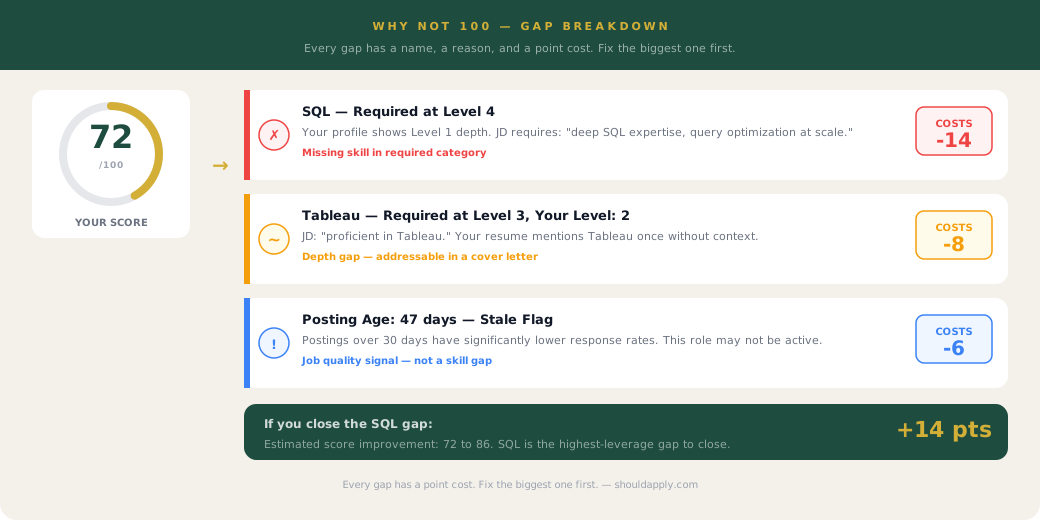
What the Report Shows
Every gap item in the Why Not 100 report has three parts: what is missing or mismatched, why it matters (required vs. preferred, depth vs. absence), and exactly how many points it is costing your score.
This is the glass box principle: you should never have to wonder why you scored 73 instead of 85. The breakdown makes every point of your score accountable and improvable.
Four Types of Gaps
You do not have this skill in your profile at all, and it is listed as required.
You have the skill, but the JD requires a deeper level than your profile shows.
Your profile has the skill at the right level, but your resume does not surface it clearly.
The posting itself has a red flag: stale age, no salary listed, high applicant count, or not found on the company career page.
Using It as Interview Prep
The Why Not 100 report has a second use most people miss: it tells you exactly where an interviewer is going to probe. The gaps visible in your profile relative to the JD are the same gaps a skilled interviewer will target.
Find your top 2-3 gap items in the Why Not 100 report. These are your interview focal points.
For each gap, prepare a direct, 60-second answer. Do not hide it; frame it. 'My SQL experience is primarily at query-writing level, not schema design, but here is how I have applied that alongside my analytics background...'
Identify one concrete example per gap that demonstrates more competency than your profile currently shows. If you can do this, the gap is smaller than it looks.
For gaps you cannot close, have a clear response ready about your development plan. Directness with forward orientation is more persuasive than deflection.
The Highest-Leverage Gap Rule
You do not need to close every gap to improve your score significantly. Focus on the single largest point cost in the report.
A job scoring 72/100 with a 14-point SQL gap becomes an 86 if you close that one gap. That is the difference between a borderline candidate and a strong match, for one skill improvement. The Why Not 100 report shows which gap has the highest leverage before you invest any time.
Go Deeper
Frequently Asked Questions
Are all gaps equally important?
No. Required skill gaps have significantly more impact than preferred skill gaps. A missing required skill at a deep proficiency level costs far more than a missing preferred skill at a basic level. The Why Not 100 report ranks gaps by impact so you can prioritize accordingly.
What if I have the skill but the gap report shows it as missing?
This usually means the skill is not in your profile or is not visible in your resume text. Add it to your profile skills with the appropriate level, or add specific language to your resume that maps to how the JD describes the skill. Semantic matching understands meaning, but it needs something to match against.
Can I close a gap just by rewriting my resume?
For resume representation gaps: yes. For actual skill depth gaps: no. Rewriting your resume to claim Level 4 SQL when you are at Level 2 does not close the gap. It creates a problem in interviews. The report distinguishes between gaps you can fix in your materials and gaps you cannot.
How does the point cost system work?
Each gap type has a different level of impact on your score based on how critical it is to role success. Required skills in your core competency area have the highest impact. Preferred skills have less impact. Job quality flags affect your score less than skill gaps because they reflect the posting quality, not your qualifications.
See your own Why Not 100.
Every score comes with the full gap breakdown. Free to start, no credit card needed.
Get Your Free Score