How the score is built
The engine reads the job description and your profile together in a single pass, scores five dimensions independently on their own point scale, then sums them into one 0-100 number.
Automatic disqualifiers: A handful of conditions override the weighted total and zero the score out entirely: commission-only or MLM roles, contract or freelance postings, agency or staffing listings, and roles that need a degree, license, or clearance you do not have. No amount of skill match makes up for these.
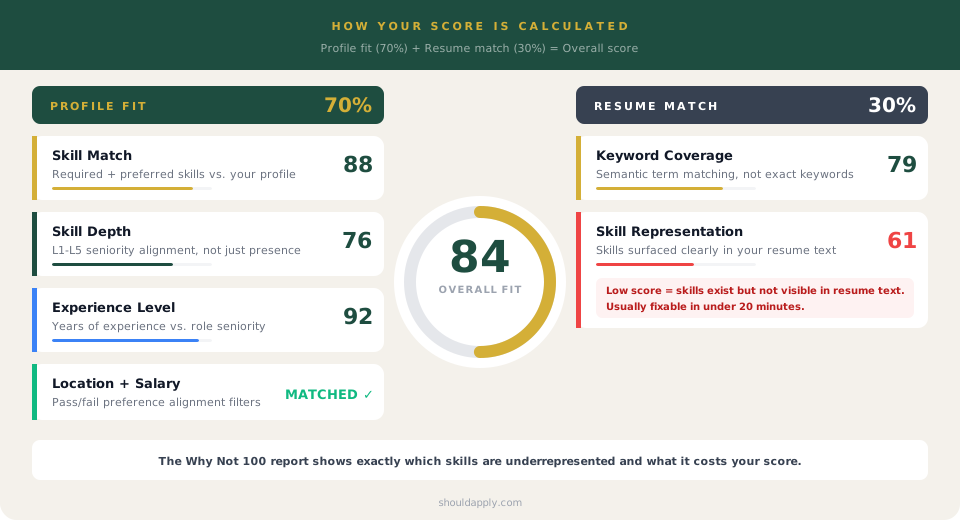
The five scoring dimensions
Each dimension contributes independently. You see every sub-score in your dashboard alongside the overall number.
Skills Match
40 pointsEvery skill in the JD, required and preferred, is mapped against your profile, and the L1–L5 depth the role needs is matched against the depth you actually have. The job's core, defining skill (the one in the title or mentioned most) counts two to three times more than secondary ones.
Experience
25 pointsYour relevant years in this specific field, not your total career span. A role in an unrelated field, like retail or hospitality, does not count toward marketing or engineering experience even if it happened during the same years.
Seniority Fit
15 pointsWhether the job level matches your career stage. A senior candidate applying to a junior role is overqualified; a manager applying to a director or VP role is underqualified. Either direction costs points.
Industry Fit
10 pointsSame industry scores full points, adjacent industries score partial credit, and unrelated industries score low. Listed industry knowledge that matches the company's domain adds back points here.
Culture & Logistics
10 pointsLocation match, remote alignment, and salary range fit. Remote roles get full points automatically since location is not a concern for them. This is a normal weighted dimension, not a pass/fail gate.
Reading your score
The number is a starting point, not the decision. Here is what each range usually means and what to do about it.
Apply immediately and prioritize this role. Profile and resume both align closely. Spend the time on a real cover letter.
Worth applying. One or two addressable gaps. The Why Not 100 breakdown shows which are fixable before you submit.
The gaps are real but may not be disqualifying. Check whether they sit in required or preferred skills. A fresh posting here is worth a targeted application.
Better invested in higher-fit roles. Unless something compensates, your odds improve a lot with a better-matched role.
Move on. The gaps across core dimensions are too large to overcome through application strategy.
Go Deeper
Frequently Asked Questions
Why does Skills Match count for more than the other dimensions?
Skills Match carries 40 of the 100 points because it is the strongest single predictor of whether a recruiter calls you back. It is not just whether a skill is on your profile: the engine reads how deeply the role needs each skill and how deeply you have it, and the job's core, defining skill counts two to three times more than secondary ones.
What if my Skills score is high but my Experience or Seniority score is low?
That is a common, specific gap. It usually means you have the right skills but not enough relevant years in this particular field, or the role sits a level or two above or below where your career actually is. The Why Not 100 breakdown shows exactly which dimension cost you points and why.
Does the score change if I update my profile?
Yes. Your profile is re-scored whenever you update your skills or resume. The score input hash system means we only recalculate when something actually changes, so your scores stay current without unnecessary API calls.
How is this different from ATS keyword matching?
ATS matching checks if specific words appear in your resume. The ShouldApply engine understands meaning: it knows that managed cross-functional teams and led interdisciplinary groups describe the same competency. It also reads depth, not just presence, so it can tell a skill you have used once apart from one you have led a team on.
See it on a real job.
Run a free score on any job posting and get the full breakdown: all five dimensions, Why Not 100 gaps, and job quality signals.
Get Your Free Score