Blog
Job search advice backed by data.
No recycled career tips. Just practical strategies for reading job descriptions, figuring out if you qualify, and spending your time on applications that actually go somewhere.
 Resume
Sample ATS Resume With Notes
See a sample ATS resume with notes on every section: headings, bullets, keywords, and file type, plus what the BLS says about the market you are applying into.
 Career
What 'Senior' Really Means
See what 'senior' actually means across real job postings, backed by BLS labor data, so you can tell inflated titles from real ones before you apply.
 Resume
ATS Resume Template That Parses
Get an ATS resume template that parses cleanly: the exact layout, headings, fonts, and file format to use, plus a free copy-and-paste structure.
 Career
How to Write Job Descriptions
Learn how to write a job description that attracts qualified candidates, using real BLS labor market data to show what applicants actually want to see.
 Resume
How ATS Resume Scanning Works
ATS resume scanning explained: how an ats resume scanner parses your file, screens for knockout rules, and ranks you, with August 2026 BLS hiring data.
 Career
Competitive Salary: How Much Less?
Do jobs that say competitive salary pays less? Here is what BLS JOLTS data shows about leverage, plus how to price the gap before you apply to any listing.
 Career
Hidden Cost of a Bad Hire
The cost of a bad hire goes beyond salary. See the hidden costs for employers and candidates, backed by July 2026 BLS JOLTS hiring and quits data.
Why Companies Post Ghost Jobs: The Real Reasons
40% of hiring managers admitted to a fake listing in a 2024 Resume Builder survey. The five stated reasons, and the dull ones behind the rest.
Job Posted for 60+ Days? How to Read an Old Listing
A listing 60 days old adds 35 points to its ghost score, and 90 days adds 50. See what age really says and when an old job is still worth applying to.
Hiring Freeze Signs During Your Interview Process
6 signs a hiring freeze has stalled the role you interviewed for, from changed recruiter language to a shrinking careers page, and when to move on.
Are Ghost Jobs Illegal? What the Law Says in 2026
No US federal law bans ghost jobs. Ontario has required a vacancy statement since Jan 1, 2026, and New York passed a bill in June. What applies to you.
 Job Search
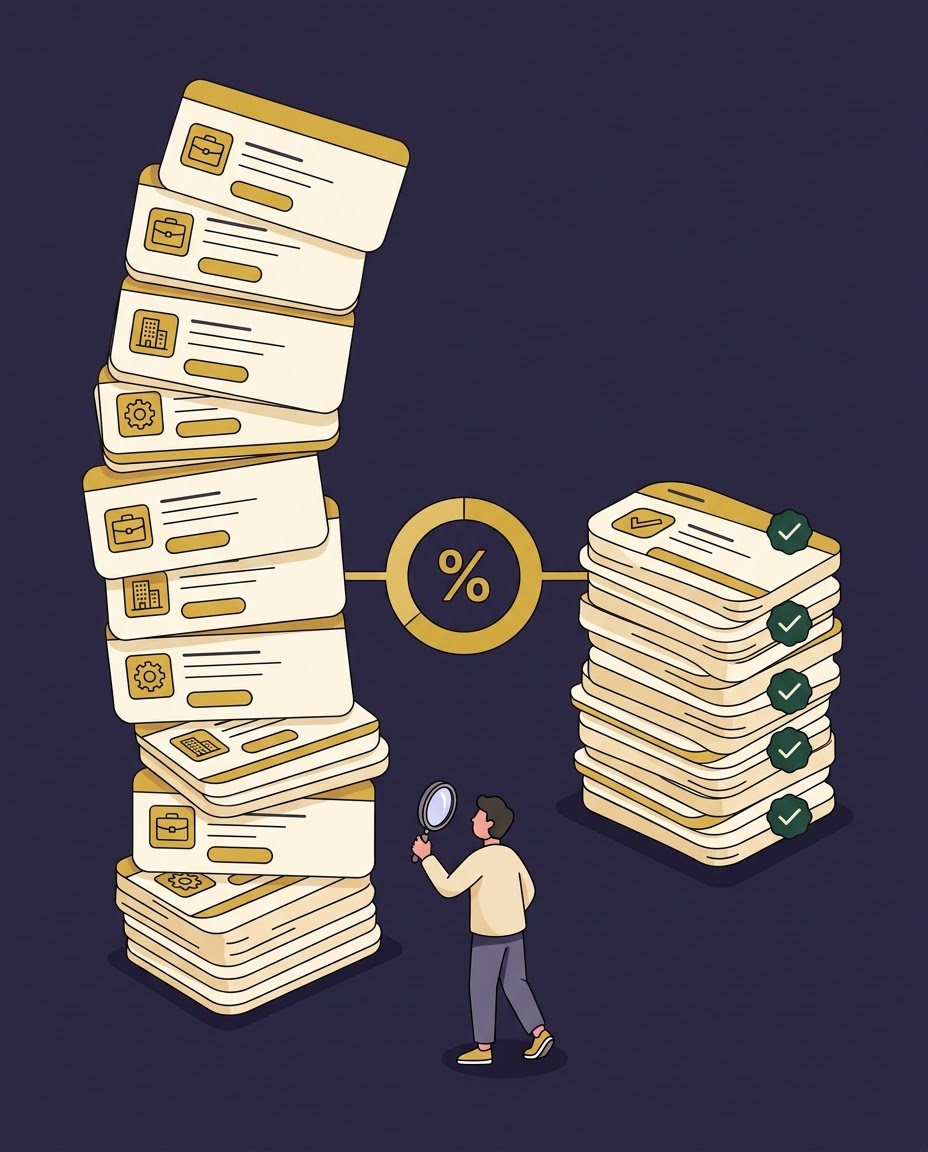
How to Know If a Job Is Right for You: A Scoring Method
Score a listing against your resume, then check pay, duties, and company health, so you can skip the guesswork before you apply.
The ShouldApply blog covers the parts of the job search most advice skips: how to read a job description honestly, when a posting is worth your time, and how to tell whether a company will actually sponsor a visa. Every post is built on the same hiring data behind our free tools, H-1B sponsor lookup, and monthly job market reports, plus the new corporate job postings map for postings and pay by state.
The most-read posts decode hiring signals that companies never explain. What it means when a job gets reposted after your interview, when a recruiter says they are still interviewing other candidates, or when a posting says the role is unable to sponsor a visa. Each one pairs the honest answer with what to do next.
There are also data posts pulled from the scoring pipeline itself: what percentage of requirements you actually need to meet, how many interview rounds are normal, and how long it takes to find a job after a layoff. New posts publish weekly.
Resume posts cover the practical side: what a competitive salary claim actually means, how to answer salary expectation questions without leaving money on the table, and how to negotiate a low offer once you have one in hand. H-1B posts cover which companies actually file, approval rate trends by industry, and how to read a job posting for real sponsorship intent versus filler language.
All posts connect back to tools you can run on your own profile. Score a job against your resume on the jobs dashboard, check a company's H-1B history in the H-1B sponsor lookup, or run a free fit check on the tools page without signing up. Reading and acting on the same page is the point.